

Running On Butter exists to be the meteorite that decimates the falsehood that saturated fat—yes, butter—is as dangerous as Agamemnon’s pride or Jeffrey Epstein’s corruption.
Last week, when HHS and USDA released the updated U.S. Dietary Guidelines, I wondered if they would finally join me in correcting the decades-old lie that saturated fat and dietary cholesterol are driving our record obesity and metabolic diseases.
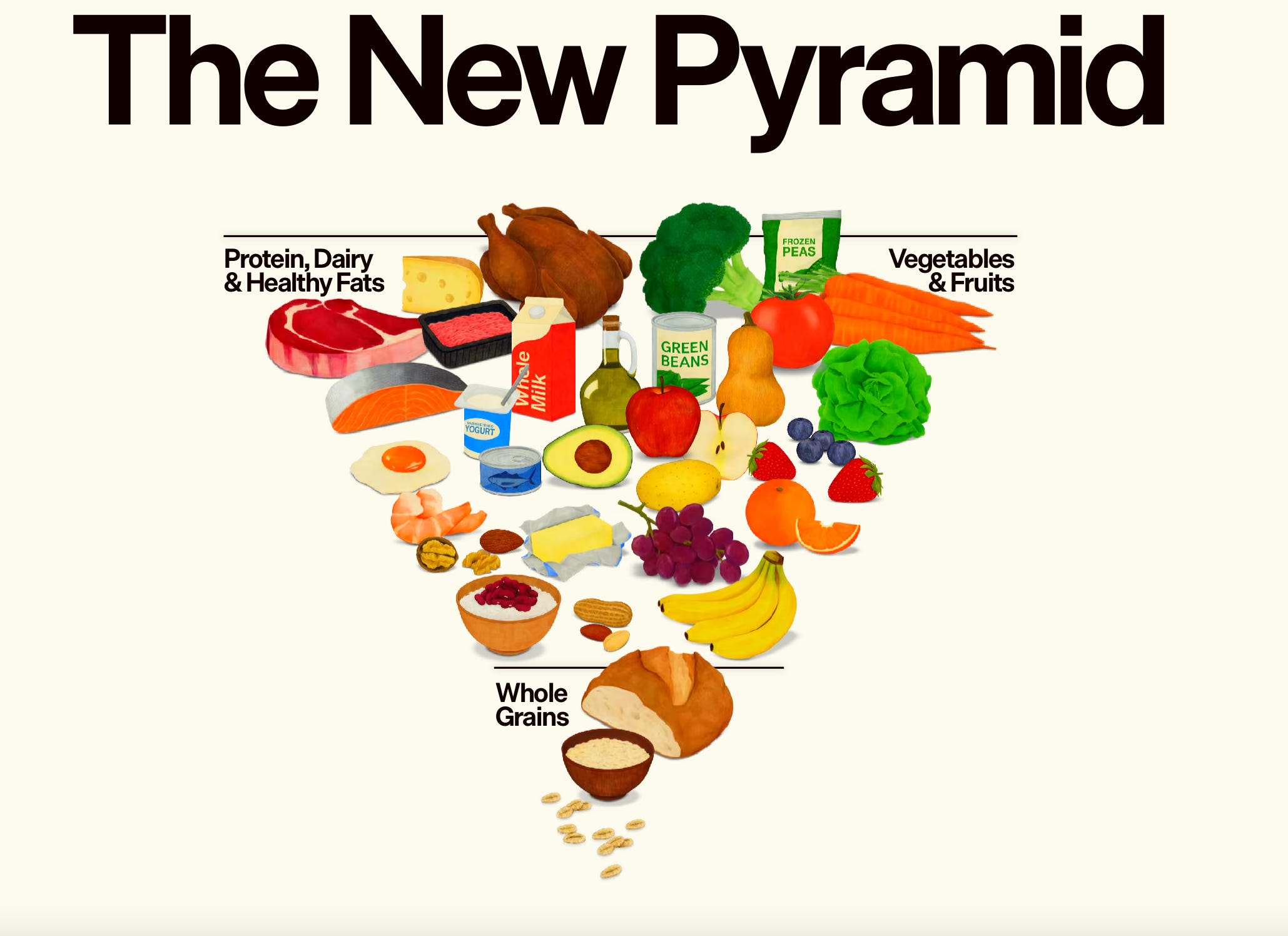
I hoped they would say, unequivocally, that butter is not to blame for heart disease. When I first saw the new food pyramid, I was excited. I loved what I saw.
But then I dove into the actual guidelines—the real policy that will dictate the diets of more than 45 million Americans—my excitement vanished.
The rules around fat are inconsistent and contradictory. They still perpetuate the false idea that butter should be eaten sparingly.
I’m not happy.
The Math Doesn’t Add Up
Throughout the new guidelines, there’s a clear emphasis on eating foods rich in saturated fat. Full-fat dairy is encouraged, and so too are egg yolks. And if you’ve been on the internet at all this week, it’s red meat stealing the show. The people are rejoicing over steaks—as they should.
While these foods are a clear focal point of the new regimen (sitting on top of the pyramid), the actual guidelines on fat are pointing us in the opposite direction, saying that we should limit saturated fat intake:
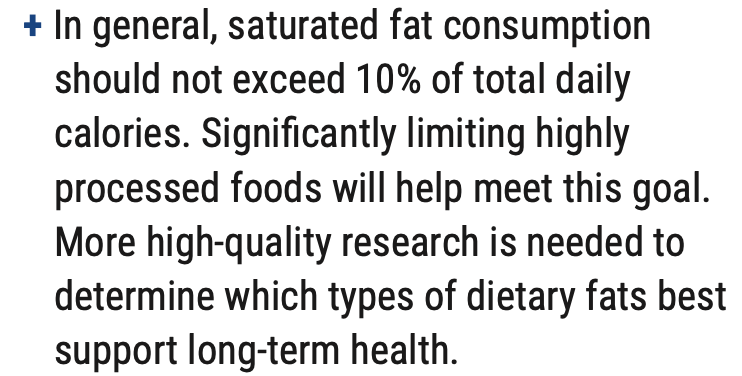
Let’s unpack these three sentences. They’re not just misleading, they’re actively harmful and, frankly, pretty clueless.
“Saturated fat should not exceed 10% of total daily calories.”
This perpetuates the decades-old lie that red meat and full-fat dairy—loaded with saturated fat—are problematic. If that were true (it isn’t), then why are these foods now the stars of the show? The guidelines basically say: “Welcome back, red meat, egg yolks, and butter!”—but immediately follow with: “Don’t overdo it. Only 10% of your diet should come from these foods.”
Here’s the problem: those two rules can’t coexist. You can’t enjoy generous portions of red meat and full-fat dairy while keeping your saturated fat under 10% of daily calories. This is a glaring contradiction that will have real-world consequences.
This 10% metric will dictate what’s served in schools, the military, and hospitals. It shapes how nutritionists design meals in nursing homes and will continue to guide doctors’ dietary understanding.
We can admire the new pyramid, with its charming illustrations of butter and steak—but in practice, nothing has changed on that saturated fat front. The government’s actual policies that dictate what up to 45 million Americans eat still restrict these saturated-fat foods, effectively ensuring that meals are made not with butter, but with industrial seed oils.
“Significantly limiting processed foods will help meet this goal.”
One of the taglines the government is pushing with this release is “Eat Real Food,” which, of course, we at ROB wholeheartedly endorse. The foods they list as “real” and minimally processed? Foods exceptionally high in saturated fat: red meat, full-fat dairy, and eggs. Yep, we’re on board.
Which is why this sentence is utterly baffling. The healthiest foods on the planet are the ones highest in saturated fat, while ultra-processed foods are loaded with unsaturated fats, primarily polyunsaturated seed oils.
In other words: processed foods = high in polyunsaturated fat; natural, unprocessed foods = high in saturated fat.
Take In-N-Out French fries, for example. They contain 15 grams of fat per serving, 13 of which are polyunsaturated seed oils. This is an extremely processed food, but low in saturated fat. The same can be said about most processed foods you can think of: frozen foods, fast foods, chips, crackers, store-bought bread and baked goods, condiments, etc.
So when the guidelines suggest limiting processed foods, it actually makes it harder to maintain that 10% saturated fat threshold.
This sentence isn’t just confusing, it’s embarrassing for whoever wrote (and approved) it.
“More high-quality research is needed to determine which types of dietary fats best support long-term health.”
This final sentence is the admission: there’s no coherent thinking behind the government’s stance on fat. They call butter and red meat “healthy fats,” yet here they hedge: “we don’t know which fats are healthy.”
If butter and red meat are healthy, why won’t they simply say that saturated fat isn’t a problem?
At best, they’re confused and uncertain after decades of nutritional propaganda. At worst, Big Food still wields significant influence over what makes it into—or stays out of—the guidelines. The $275 billion industrial seed oil market isn’t going down without a fight.
Many of my close friends are upset with me for being upset about this. They want me to celebrate the nice new pyramid.
But when did conservatives start celebrating policy for its intentions rather than its outcomes? That’s something Zorhan Mandomi supporters do, not us.
This pyramid fires up the MAHA base, but frankly, we didn’t need these new guidelines. We don’t need the government’s advice. We’re already eating regenerative organ meats and wearing organic cotton.
Who needs good guidelines? The people whose actual meals are dictated by them: low-income families, our armed forces, and nursing homes residents. Yet under these rules, the meals they rely on will still be low in saturated fat—and the health problems that come from replacing real fat with industrial seed oils, like obesity and metabolic disease, will remain.
Running On Butter will continue its crusade without the backing to the United State government.
Vance: Glad you are persistent. Those making a fortune on the ill health of people continue to want to rake in the money. Most, I'm guessing, don't have a truly healthy product to offer instead. I eat butter at every meal! And I'm glad you recommended it to me.
I suggest you read 'Dogmatism in Science and Medicine' by Henry H Bauer.
The big problem is that nobody wants to confront the American Heart Association with the facts about saturated fats. And the bureaucrats in the Agriculture Department who write the Dietary Guidelines still cling to the anti-saturated fat narrative. https://pubmed.ncbi.nlm.nih.gov/38522617/ I suggest you write to Janet DeJesus and tell her what you know about saturated fats. <Janet.deJesus@hhs.gov> May not help, but it doesn't hurt to try.