


Good morning everyone.
Special letter today. I interviewed one of my new favorite voices in the health space, Dagmara Beine, PA-C, PhD, an integrative and ER specialist (a rare combo!).
I first came across Dagmara’s writing last month, and once I read her story about her daughter’s battle with cancer, I knew it was a voice I wanted to broadcast.
Dagmara was gracious enough to answer my questions about her approach to medicine and disease. And boy, what a knockout thinker she is.
We discuss:
The multifaceted reasons her daughter got leukemia (glyphosate exposure, tonsil and adenoid removal, and fertility treatment)
Whether we should be concerned about Alzheimer’s genes
Why she thinks children should get lab work
How to avoid insulin resistance
Whether or not she approves of butter
Please make sure to subscribe to her Substack to continue to glean from her wisdom.
1. You’ve endured profound personal loss, from your daughter’s battle with cancer to the sudden death of your brother. How have those experiences changed the way you practice medicine?
Most of what I learned, I learned from my daughter Zuza while she was alive. She was in and out of cancer treatment for over a decade, and she taught me that a person can hold suffering and joy in the same hands, in the same moment. I didn’t believe that was possible until I watched her do it. That lesson shapes how I sit with grief now.
Those years also taught me how to keep my own nervous system steady, how to carry hope without lying to myself, and how to take care of me so I had everything left to give her.
Then, one week apart, we lost the two of them in the two most different ways a person can. Zuza we lost slowly, over eleven years, no rock left unturned, every choice made and every option tried. Olaf we lost in an instant, sudden and traumatic and out of nowhere. Two griefs that don’t sit the same way, arriving at the same time. Nine months into that apprenticeship, I’m learning how to carry both.
One lesson only arrived after she was gone. Anyone facing cancer, a parent sitting with a sick child or an adult facing their own diagnosis, needs hope, and also needs someone willing to talk honestly about quality of life and to sit in both places at once. As practitioners, we tend to project our own fears onto our patients without meaning to. I never steered away from real conversations about death with my cancer patients, pediatric or adult. But without having lived it, I couldn’t feel my way into those conversations the way I can now. Since Zuza, I can sit in that place fully, and walk a family through end-of-life decisions with a steadiness I didn’t have before, because I’ve been all the way through it myself.
Olaf’s death taught me how silent mental health can be. Zuza had cancer, and all of us knew, and everyone rallied around her. Olaf suffered quietly, with a smile on his face and a warm heart, and none of us saw how much he was carrying. It opened my eyes to how many people, young men especially, are hurting behind a smile. I look for it in my patients now in a way I never did before.
2. Cancer rates seem to be rising, especially among younger people. What do you think is driving this trend?
Cancer is not bad luck. We’ve been told it strikes at random, and that isn’t what the research shows. Up to 90 percent of cancers trace back not to a roll of the dice but to the terrain a body is living in.
Here’s the part most people never hear. All of us make cancer cells. Our bodies produce abnormal cells, and a healthy body finds them and clears them before they become anything. So the real question was never whether you make a cancer cell. It’s whether the environment inside you lets that cell take hold and grow.
That environment is your terrain, the soil your cells live in. It’s what you eat, so much of it now ultraprocessed. It’s what we put in and on our bodies, including harmful medications and injections, makeup, hair dye, and perfume. It’s what you breathe, how you sleep, how you move, and the chemicals and stress you carry. Good soil clears the bad cell. Ruined soil lets it grow.
And this is where epigenetics comes in. Your genes are not your destiny. What they do is set how vulnerable you are to everything hitting your terrain, how well you clear a toxin, how well your body handles what comes at it. That’s why two people can live in the same town, drink the same water, and only one of them gets sick. Same exposure, different soil.
So a cancer diagnosis is rarely one thing. It’s a perfect storm, a stack of small hits landing on a terrain that couldn’t keep up. Let me show you what I mean with my own daughter. Before Zuza, I had two miscarriages, and I was prescribed a fertility drug to conceive her. It worked. Later I found research linking maternal fertility treatment to a higher risk of the exact type of leukemia she had. Then we bought our dream house, and it sat behind a cornfield sprayed with glyphosate season after season. Zuza’s epigenetic testing, a test I now run on every patient, showed she couldn’t clear glyphosate well. And on our pediatrician’s advice, we had her tonsils and adenoids removed, which research ties to a higher risk of childhood leukemia. Not one of these alone would likely have caused cancer. Stacked together, in a small body that couldn’t clear what it was handed, they became her perfect storm.
The hopeful part is the whole reason I do this work. You are not helpless here. You can’t change every gene you were handed, but you have real say over your terrain, and that is where the power is.
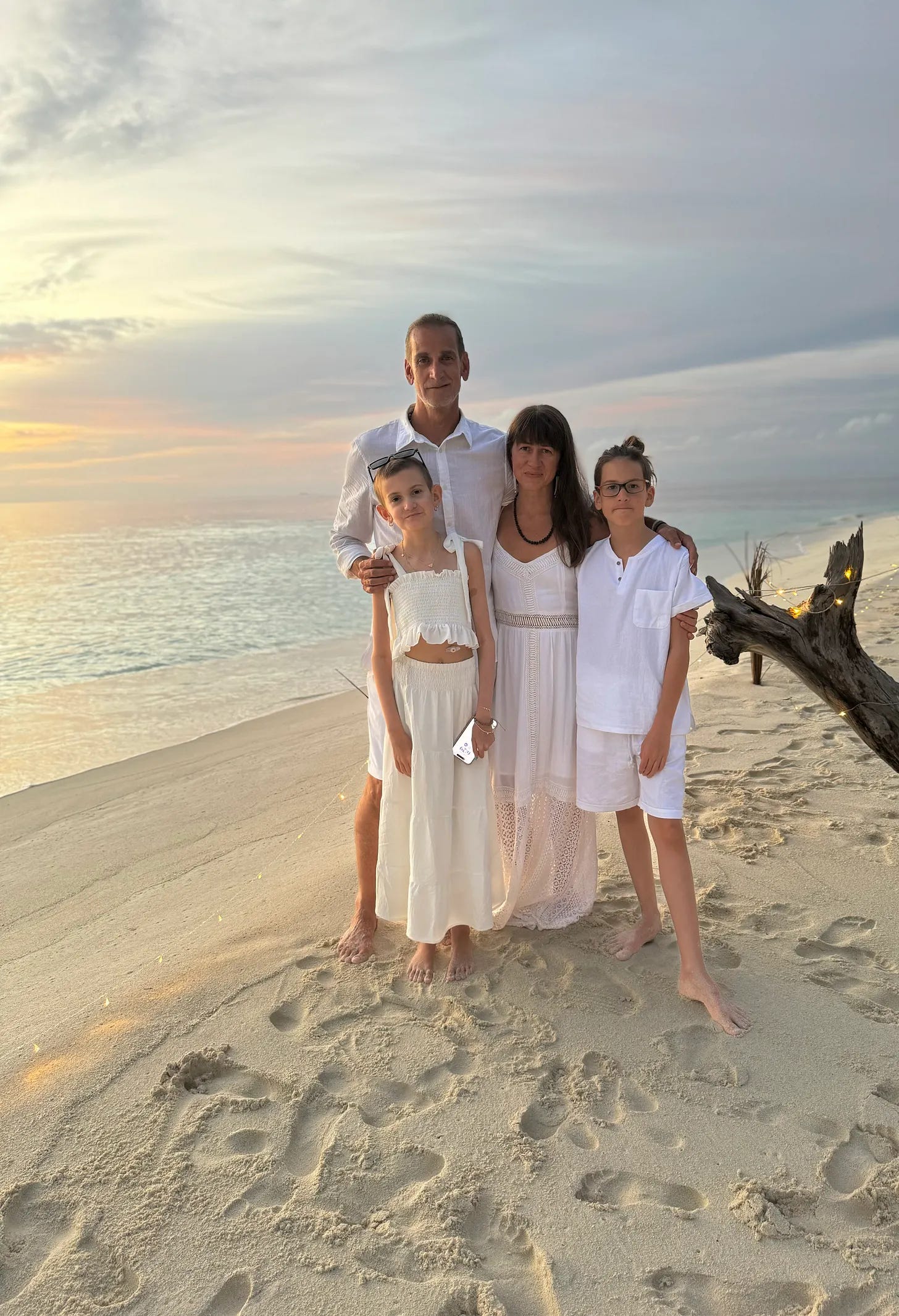
3. You often say that inflammation is at the root of most chronic disease. What do you mean by that, and why is it so important?
Inflammation is the match that lights the fire.
Go back to cancer for a second. You can have a few cancer cells sitting in your body, but if you’re not inflamed, the fire never catches. Inflammation is the thing that lets it take off. It’s the accelerant under most of what makes us sick.
I support patients through cancer, autoimmune disease, long COVID, histamine problems, and a long list of other chronic conditions. On the surface those look like completely different diagnoses. Underneath, they share one thing. Every one of them is running on inflammation.
And here’s what most people don’t realize. We can measure it. Not with a guess, with your blood. I look at inflammation three separate ways with three simple tests, hs-CRP, sed rate, and LDH. They’re cheap, they’re on almost any lab menu, and together they tell me whether your body is quietly on fire.
This is the part that gets me. When someone comes to me with a new diagnosis and I pull their old labs, I’ll often find one of these markers, usually CRP, was already climbing years earlier. It was the check engine light coming on. Their primary care or their specialist looked right past it, because it wasn’t high enough to earn a diagnosis yet. That early signal is exactly the window where we could have changed the story.
It matters because that number is not just a curiosity. Elevated CRP tracks with higher all-cause mortality, meaning a higher risk of dying from any cause, not one specific disease. Your body is waving a flag long before anything gets a name.
The hopeful part is that inflammation is one of the most changeable things in all of medicine. Food, sleep, movement, stress, and the gut all move that number, and when you cool the fire, you change the whole trajectory. That’s why I start here with almost everyone.
4. You’ve argued that pediatricians should be doing more routine lab work. What tests do you think are being overlooked, and what can they reveal?
I think we’ve decided that a healthy-looking kid doesn’t need labs, and that’s backwards. The years we should be watching a body most closely are the years it’s still being built. A yearly panel on a child isn’t overkill. It’s a baseline, and it’s how you catch a small problem while it’s still small.
Here’s the minimum I’d want run on kids. A CBC. A full CMP. hs-CRP. Vitamin D. Ferritin. And a full thyroid panel, meaning TSH, T3, T4, and thyroid antibodies, not just a lonely TSH. That’s not an exotic workup. Most of it is inexpensive and available anywhere.
Now what each one actually tells you.
The CBC is the workhorse. It catches anemia, it flags chronic infection, and it can surface allergy patterns hiding behind vague symptoms. The neutrophil-to-lymphocyte ratio off that same test is a quiet read on how the immune system is doing, and almost no one calculates it in kids.
The CMP opens up a lot. It’s an early look at blood sugar and prediabetes, which is showing up in children now in a way it never used to. It shows liver health and kidney function. It tells you whether a child is getting and absorbing enough protein, which is a real question in picky eaters and gut issues. Read right, it even hints at thyroid trouble and malnutrition.
hs-CRP is the inflammation flag, that same check engine light, and it belongs in kids too.
Vitamin D is one of the most common deficiencies I see in children, and it’s not a small thing. It drives bone development, immune strength, and mood, and low levels are everywhere, especially in kids who live indoors and on screens.
Ferritin is iron storage, and low ferritin is one of the most missed findings in children. It shows up as fatigue, poor focus, restless sleep, and irritability long before a child is technically anemic. Paired with certain CMP clues, a low ferritin can also point toward malabsorption or a leaky gut, which sends you looking for the actual root instead of just handing over an iron pill.
B12 is the one I go back and forth on. On its own it’s not a strong test. The serum number can look fine while there’s still a problem sitting underneath it. But it gives me a clue, and what I’m actually chasing with it is methylation. A lot of kids carry a common variation in a gene called MTHFR, which changes how well they process folate and B vitamins. When that pathway runs slow, it can show up as things that look a lot like ADHD, anxiety, or mood struggles. Those kids get a label, and sometimes a medication, when part of what’s going on is a methylation issue you can support with the right form of the nutrient. So I don’t lean on the B12 number itself. I let it point me toward the bigger question.
Here’s the thing I’ll keep saying. Children are not small adults, and the ranges that matter for a growing body shift by age and stage. So this is not about panic over one number. It’s about building a baseline early, watching the trend, and catching the drift while it’s still easy to turn around.
5. Many people have heard about the APOE4 gene—a risk factor for Alzheimer’s—but don’t know what it means. What is APOE4, and how concerned should people be if they carry it?
Start with this, because it’s the whole mindset. Your epigenetics are a loaded gun, and your environment pulls the trigger. The gun alone doesn’t fire. That changes everything about how you should hear news like this.
APOE is a gene that helps your body move fat and cholesterol around, including inside your brain. Most people carry the common version. Some carry APOE4, and that one is the strongest common genetic risk factor we know of for late-onset Alzheimer’s. It also changes how you process the fat in your food.
The numbers sound scary until you understand them. About one in four people carry a single copy of APOE4, which more than doubles the lifetime risk. A much smaller group, around two to three percent, carry two copies, which raises it far more and tends to bring symptoms on earlier. Here’s the part that matters most. Carrying it is not a diagnosis, and it is not a destiny. Plenty of people who carry APOE4 never develop Alzheimer’s at all, because whether that gun ever fires depends heavily on how you live.
So when a client finds out they carry it, and many of mine do, I don’t treat it as a sentence. I treat it as a blueprint. Now we know exactly where to aim your energy.
And the things that lower the risk are within reach. Keep your blood sugar and insulin low, because a brain marinating in high blood sugar is a brain in trouble, which is why I lean toward lower carb and quality fats for these clients. Move your body, since exercise is one of the most protective things we have for the brain. And use heat. A Finnish study followed men for two decades and found those using a sauna four to seven times a week had about a 65 percent lower risk of Alzheimer’s than those going once a week. Sixty-five percent, from sitting in a hot room.
That’s why I test epigenetics on everyone. Not to hand someone a fear, but to hand them their own blueprint, so they know where their body is vulnerable and where to spend their effort. You can’t change the gun you were handed. You have a lot of say over the trigger.
6. Insulin resistance affects millions of people, often without them realizing it. What’s your practical action plan for preventing, or reversing, it?
The first step is running the right test, and this is the one that gets me most.
The earliest sign of insulin resistance shows up in your fasting insulin, and that test is not part of the standard annual panel your primary care runs. It’s cheap, it’s available anywhere, and almost nobody orders it. That blows my mind.
So order it yourself if you have to. Every year, check three things. Fasting insulin, under 5. Fasting glucose, under 90. And hemoglobin A1c, under 5.3. Anything creeping above those is the start of a slow march toward prediabetes. Because nobody wakes up diabetic. We drift there over years, and the labs show the drift the whole way, if someone bothers to look.
And here’s what makes me angry on my patients’ behalf. When a provider does run a fasting insulin, they’ll call a 20 normal, because the lab flags “normal” as anything up to 25. A fasting insulin of 20 is insulin resistance. Calling it normal takes away your chance to turn this around while it’s still easy. Normal is not optimal. Normal just means average, and the average American right now is overweight, inflamed, and unwell.
This is the part I love. I reverse prediabetes and diabetes with patients most of the time without medication, using lifestyle. A low carb, nutrient dense diet. Movement that builds and holds muscle, because muscle is where you burn glucose. And a few targeted supports like berberine when they fit the person.
This is the whole game, because insulin resistance sits underneath so much of what wrecks our health. Cancer, diabetes, heart disease, the misery of perimenopause and menopause (which should be a beautiful transition, not a crisis), acne, stubborn weight, fatigue. So many of them trace back to this one broken pathway. Fix the pathway, and you don’t just dodge diabetes. You take back your energy, your weight, and a whole lot of your future.
This is exactly why I built what I built. I love my 1:1 work with clients across the country, and I always will. But I can’t sit with everyone, so I created a coaching community and course that teaches you to read your own labs against optimal ranges, with a tool that reads them back the way I would if you were sitting in front of me. It’s called Optimal Not Normal (skool.com/optimal-not-normal-1374). Because the goal was never for you to need me forever. It’s for you to understand your own body.
7. And finally, the question every Running on Butter reader is waiting for: are you a fan of butter?
Huge fan. Real, grass-fed butter is one of the good ones.
We’re about to make our move out to the farm, and one of the things I can’t wait for is making our own. There’s something about butter that’s this simple, this old, this made-by-hand that feels like the whole point of what I teach. Real food your body actually recognizes.
I take mine very salted, or with truffle salt melting on top. So yes, put me down as a fan, and I’m honored you asked.
Hello Running On Butter: Thank you for this article and the link. Your article brought up some new elements for me to ponder as I reflect on my late son’s life and death. Parents often wonder how their kid got cancer. These works speak to that in easily understandable language. Thank you. When you are up for it, please read my essay, Lessons from Another Kid with Cancer. Again, thank you.
Thank you for this interview! I first found Zuza years ago and have followed Dagmara ever since. She is a gift!