

Good morning everyone.
Today we’ve got a terrific interview with Dr. Josh Axe.
Dr. Axe not only has the name of a superhero, but he’s also something of a Superman in the holistic health world. He’s been doing the Lord’s work for years, and the world has benefited greatly from his wisdom.

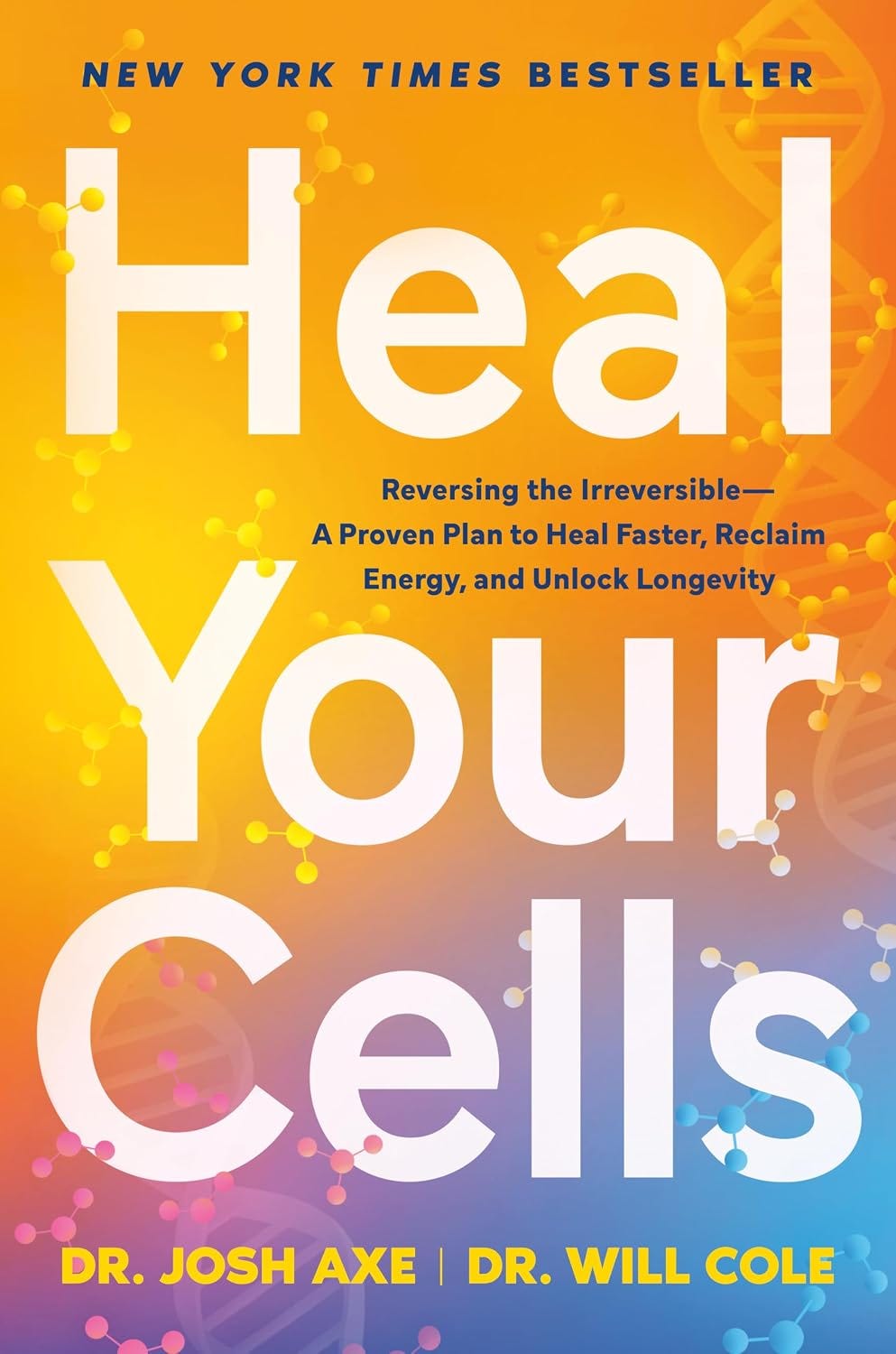
He, along with Dr. Will Cole, just released Heal Your Cells. I read it on my honeymoon, and as someone who reads a lot of health books, I can confidently say this one is exceptional.
The book is scientifically thorough, historically rich, and, perhaps most importantly, incredibly hopeful and accessible.
It’s a great resource for doctors, stay-at-home MAHA moms, the health-curious who haven’t been feeling quite right, or even your libbed-out Aunt Karen who just got her 27th Covid booster.
1. When you became so sick you were bedridden for months, was there any embarrassment or shame in that? [Editor’s note: Dr. Axe developed a life-threatening spinal infection following stem cell treatment. He shares the full story in his book.]
Absolutely, there was. When your name is on a health website that millions of people read, there’s a quiet pressure to always be the guy who has it figured out. Then I’m lying in bed for months, barely able to stand up straight, and the questions start: What did I miss? What will people think? I’ve helped other people heal but can I actually heal from this?
I am incredibly grateful to God that I was able to heal 100%. As you know if you’ve read the book, I didn’t walk on my own for 10 months, then a couple more months on a walker due to a spinal infection that had begun destroying my disc, L4 and L5 vertebrae and an abcess growing by my spinal cord. A big part of my healing was daily prayer and a highly anti-inflammatory diet consisting mostly of salmon, berries, pomegranate, bone broth, and steamed vegetables. I got a hyperbaric chamber several days a week and also utilized peptides and stem cells for healing. I’m happy to say I’m now playing pickleball, snow, skiing, and able to run around and be very active with my kids.
That season became one of the greatest gifts of my life. It humbled me. It made me a better doctor, because I learned what it feels like to be the patient who feels like they have a mountain in front of them and doesn’t have answers. And it pushed me deeper into my faith. Second Corinthians 12:9 became real to me: God’s power is made perfect in weakness. I didn’t need to be the picture of health. I needed to be honest, rest, and let the body God designed do what it was built to do, which is repair. That’s really where Heal Your Cells was born.
2. Yet again, one thing that struck me in the book is just how intricate the human body is. Help me connect the dots: How do seemingly simple lifestyle choices—what we eat, how we sleep, how we move—compound over time to change what’s happening at the intricate cellular level?
Your body is made of roughly 30+ trillion cells, and every one of them is constantly listening. What you eat, how you sleep, how you move and what you think are all signals. Your cells respond by turning genes on or off, making more or fewer mitochondria, calming or fanning inflammation, and deciding whether to clean house or let damage pile up.
In the book we lay out nine hallmarks of aging, things like mitochondrial dysfunction, oxidative stress, inflammaging, impaired autophagy and cellular senescence. None of those happen overnight. They’re dominoes. A night of poor sleep raises cortisol. Higher cortisol pushes up blood sugar. Repeated blood sugar spikes increase oxidative stress. Oxidative stress damages mitochondria. Struggling mitochondria make less energy and more inflammation. One domino doesn’t feel like much. Ten years of dominoes feels like disease.
The good news is that it works the same way in reverse. Get morning sunlight, eat a colorful meal, go for a walk after dinner, pray instead of scroll, and you’re sending repair signals. Your cells are always renewing. You’re literally rebuilding yourself every day, so you get to decide what you’re building with.
3. You’ve remained remarkably steady in a health world full of ever-changing fads. How have you avoided getting swept up in every new health trend?
I run everything through two filters: ancient wisdom and modern science. If something has been used for thousands of years in traditional medicine and modern research is now confirming why it works, it is always encouraging. If it’s brand new, has one study behind it and someone’s selling it hard, I wait.
Also, I’ve learned to think in principles. Because I understand the way something works and the way the human body works, I can often see their good marketing and unreal promises.I also look at whether it works with the way God designed the body or tries to override it. The things that last, like whole foods, herbs, sleep, sunlight, movement, fasting, community and faith, support the body’s own repair systems. Fads usually promise a shortcut around those foundations. There isn’t one.
That doesn’t mean I’m against new things. Some of the most exciting work today is in regenerative medicine and cellular health. But a new tool should sit on top of the foundations, never replace them.
One example might be around red light therapy. I know that the sun gives off of red light, which can be healing to our bodies. What we’ve done with red light therapy as we have been able to harness a few of the types of light that come from the sun and it benefits us because most of us do not spend enough time outdoors and get enough sunlight. The same is true for a lot of our modern day bio hacking and functional medicine therapies.
4. We often think of healthy eating as bland chicken breast and broccoli. But in your book, you paint a much more exciting picture of food and the incredible variety of compounds God created. Could the very things that make food delicious—its flavor, color, spice, and aroma—also be clues to its nutritional value?
Yes, and I love that you picked up on it. The color in a blueberry, the bitterness in dandelion greens, the bite of ginger, the aroma of rosemary are all compounds plants made to protect themselves. Anthocyanins, carotenoids, polyphenols, glucosinolates, gingerols, terpenes. When we eat them, many of them act as gentle stressors that tell our cells to switch on their own antioxidant and repair defenses.
Traditional Chinese Medicine has taught this for centuries through the five flavors: sweet, sour, bitter, pungent and salty, each supporting different organ systems. Modern science is catching up. Research on the gut microbiome has found that people who eat a wider variety of plants each week tend to have a more diverse microbiome, which is linked to better health.
So yes, bland chicken and broccoli isn’t the goal. Add herbs, spices, bitter greens, deep-colored fruits. If your plate looks like a rainbow and smells amazing, you’re probably eating closer to how God intended.
5. Give us three foods we should eat this week, and tell us why.
Wild-caught salmon. It’s rich in the omega-3s EPA and DHA, which become part of your cell membranes and help your cells communicate. They also contain astaxanthin which protects your cells from oxidative stress. They’re also the raw material your body uses to make compounds that actively resolve inflammation instead of just quieting it. Aim for two servings this week.
Pomegranates. Pomegranates are loaded with ellagitannins, which certain gut bacteria convert into a compound called urolithin A. Urolithin A has been shown to support mitophagy, the process where your cells clear out worn-out mitochondria so new, healthy ones can take their place. It’s a perfect example of food, microbiome and mitochondria working together. Eat the seeds on a salad or by the handful.
High-polyphenol extra virgin olive oil. Not all olive oil is created equal. The high-polyphenol varieties (the ones with a peppery bite in the back of your throat) contain compounds like oleocanthal and hydroxytyrosol that fight oxidative stress, support healthy blood vessels and help switch on autophagy, your cells’ cleanup crew. A tablespoon or two a day, drizzled over vegetables or salads, is a great start.
[Editor’s note: I kid you not—Alexandra and I have been eating so much salmon, olive oil, and yes, even pomegranates lately. Her favorite is fresh-pressed pomegranate juice, which we’ve been making with the hand-cranked juicer CrossFit Kevin got us. We’ve also been adding the seeds to our yogurt and homemade guacamole. I high-key felt so legit when I read this answer from Dr. Axe. “Wow,” I thought. “We’re like A+ students down here in Scottsdale.”]
6. What do you say to the 25-year-old who drinks Diet Coke, eats Chick-fil-A regularly, but works out, stays thin, and feels great? Why should they care about their health now when their body seems to be handling everything just fine?
I’d say: feeling fine and being healthy aren’t the same thing. Most chronic disease is silent for years. Insulin resistance, arterial plaque and gut damage build quietly long before they show up as a diagnosis. Thin on the outside doesn’t always mean healthy on the inside.
Think of it like compound interest. At 22, small choices feel like they don’t matter because you can’t see the balance yet. But your cells are keeping the books. Daily artificial sweeteners have been shown to alter the gut microbiome. Energy drinks keep your stress hormones elevated and borrow energy from tomorrow. Fried foods cooked in industrial seed oils add oxidative stress. None of that sends you to the hospital this year. It shapes what 40 and 50 feel like.
The flip side is that your 20s are your greatest opportunity. You have more cellular resilience right now than you ever will again. Protect it. You don’t have to be perfect. Swap the daily Diet Coke for sparkling water with lime or an organic green tea with honey, or even something using a more natural sweetener like stevia that tastes more similar to your favorite beverage. At Chick-fil-A, go grilled over fried. Get to bed earlier a few nights a week. Small habits started at 22 are what create a 60-year-old who still has energy to play with their grandkids.
7. What is your favorite food, and why is it butter?
Ha! I have to be honest with you: I don’t actually eat butter very often, because I don’t tolerate dairy all that well. But I love the taste of butter.
For a lot of people, especially with quality grass-fed butter, it can be an incredible healing food. It provides butyrate, which fuels the cells lining your colon, along with fat-soluble vitamins like A and K2. For people with heart challenges, though, I’d keep butter in low to moderate amounts and lean on high-polyphenol extra virgin olive oil as their main fat. It’s simply a better fit for their cardiovascular system.
So butter gets a spot at my table. Just not the head of the table.
Thank you, Dr. Axe, for your contribution to Running On Butter. I’m still trying to reconcile your half-in, half-out stance on butter. I can’t decide whether that makes you an ROB legend for challenging our infallible orthodoxy or a treasonous insubordinate.
I kid, of course. Dr. Axe, you’re a legend. So grateful for your creative and intellectual output.
NOW, ALL YOU LOYAL, NON-INSUBORDINATES, GO BUY THE BOOK AND DO YOUR HOMEWORK.
I’m with you Vance, never ever limit butter!